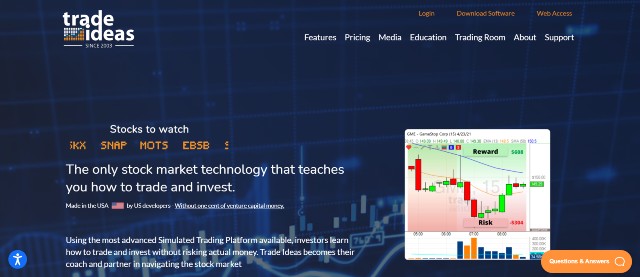
In order to ensure accuracy and reliability of insights, it is essential to evaluate the accuracy of the data sources and AI-driven stock trading platforms. Poor data can result in incorrect predictions, loss of money, and a lack of trust. Here are the top 10 methods to evaluate sources and the quality of the data:
1. Verify Data Sources
Verify the source of the data: Ensure the platform is reliable and well-known providers of data (e.g., Bloomberg, Reuters, Morningstar, or exchanges such as NYSE, NASDAQ).
Transparency: The platform should be open about the sources of its data, and regularly update them.
Avoid dependence on a single source: Trustworthy platforms integrate data from multiple sources to eliminate biases and mistakes.
2. Assess Data Freshness
Data that is delayed and real-time: Determine if a platform is able to provide real-time data or delayed. Real-time trading needs real-time data, whereas delayed data is enough for long-term analysis.
Be sure to check the frequency of updates (e.g. minute-by-minute updates or hourly updates, daily updates).
Consistency of historical data: Ensure that historical data is clear of any gaps or anomalies.
3. Evaluate Data Completeness
Look for missing data: Check for gaps in historical data as well as tickers that are not working or incomplete financial statements.
Coverage. Make sure that the platform has a wide range of stocks, markets and indices relevant to your trading strategy.
Corporate actions: Verify if the platform records dividends, stock splits mergers as well as other corporate actions.
4. Test Data Accuracy
Consistency of data can be assured by comparing the data of the platform with other reliable sources.
Look for mistakes by looking at outliers or incorrect financial metrics.
Backtesting: Use data from the past to backtest trading strategies and see whether the results are in line with expectations.
5. Measure Data Granularity
The platform must provide detailed details, such as intraday prices volume, bid-ask, and depth of the order book.
Financial metrics: See if the platform provides detailed financial statements (income statement, balance sheet, cash flow) and key ratios (P/E, P/B, ROE, etc. ).
6. Check Data Cleaning and Processing
Normalization of data - Make sure that your platform is able to normalize your data (e.g. adjusts for splits or dividends). This helps ensure the consistency.
Outlier handling - Check how the platform handles anomalies and outliers.
Incorrect Data: Determine if the platform utilizes reliable methods in order to add data points that are not being accounted for.
7. Evaluation of Data Consistency
Align all data with the same timezone. This will avoid discrepancies.
Format consistency: Check if the data is formatted in a consistent format (e.g., currency, units).
Cross-market consistency: Ensure that data from multiple exchanges or markets are in harmony.
8. Relevance of Data
Relevance in trading strategy. Ensure that the data is in line with your trading style.
Features selection: See whether the platform has relevant features (e.g., macroeconomic indicators, sentiment analysis and news data) which can improve forecasts.
9. Review Data Security and Integrity
Data encryption: Ensure that the platform is encrypted to safeguard data during transmission and storage.
Tamper proofing: Ensure that the information on the platform isn't being manipulated.
Compliance: Find out if the platform adheres to data protection regulations.
10. Check out the AI model on the platform transparency
Explainability: The platform must offer insight into how AI models make use of data to produce predictions.
Bias detection: Verify if the platform actively monitors, and mitigates, biases in the data or models.
Performance metrics: Evaluate the platform's track record and performance metrics (e.g., accuracy and precision, recall) to evaluate the validity of its predictions.
Bonus Tips
Reviews from users: Read the reviews from other users to gain a sense of the quality and reliability of the data.
Trial time: You can try out the data quality and features of a platform using an online demo or trial before you decide to purchase.
Customer support: Make sure your platform has a robust assistance for issues related to data.
Use these guidelines to evaluate the source of information and quality for AI stock prediction platforms. Make informed choices about trading based on this information. Read the recommended more helpful hints about trading and investing for blog advice including stocks for ai, chart stocks, top ai stocks, top ai companies to invest in, ai stock app, trading and investing, ai stocks to buy, stock market investing, ai stock companies, buy stocks and more.
Top 10 Tips For Evaluating The Maintenance And Updates Of Ai Stock Predicting/Analyzing Trading Platforms
To keep AI-driven platforms for stock prediction and trading effective and secure It is vital to ensure that they are updated regularly. Here are 10 best suggestions for evaluating their updating and maintenance methods.
1. Updates Frequency
You can check the frequency of updates that are made (e.g. every week, each month, or every quarter).
Why: Regular updates show active development and responsiveness towards market trends.
2. Transparency of Release Notes in Release Notes
Check out the notes included in the platform's Release Notes to find out what improvements and changes have been implemented.
Why is this: Clear release notes show the platform's commitment to ongoing improvement.
3. AI Model Retraining Schedule
Ask the AI model how often it is retrained.
What is the reason? Markets fluctuate and models have to be re-evaluated to ensure accuracy.
4. Bug fixes and Issue resolution
Tips: Find out how quickly the platform reacts to bugs or issues that users submit.
Reasons: Fast fix for bugs helps ensure the reliability of the platform and its functionality.
5. Updates to Security
TIP: Check if the platform regularly updates its security protocol to protect user data.
Cybersecurity is essential in the financial industry to avoid breaches and fraud.
6. Integration of New Features
TIP: Make sure to check if the platform introduces new features (e.g., advanced analytics, or new sources of data) Based on feedback from users or market trend.
The reason: Updates to features demonstrate innovation, responsiveness to user needs and new ideas.
7. Backward compatibility
Tips: Ensure that the upgrades you install do not need major reconfigurations or interrupt the current functionality.
Why? Backward compatibility is important to ensure an easy user experience during transitions.
8. User Communication during Maintenance
It is possible to evaluate the transmission of maintenance schedules or downtimes to users.
Why: A clear communication will minimize disruptions and build confidence.
9. Performance Monitoring and Optimization
TIP: Ensure the platform monitors and optimizes performance metrics of the system (e.g. accuracy, latency).
What's the reason? Continuous improvement ensures that the platform is efficient and scalable.
10. Compliance with changes to the regulatory framework
Check if the platform has changed its policies and features in order to comply with any new data privacy laws or financial regulations.
What's the reason? To reduce legal liability and to maintain user trust, compliance with regulations is essential.
Bonus Tip: User Feedback Integration
Find out if the platform integrates active user feedback in its upkeep and updates processes. This shows a customer-centric approach to improve.
If you evaluate these elements it is possible to ensure that the AI trade prediction and stock trading platform you choose to use is well-maintained, up-to-date, and capable of adapting to market dynamics that change. See the top rated ai for trading stocks recommendations for more recommendations including stock predictor, ai investment tools, best stock prediction website, best ai stocks, ai options trading, ai share trading, ai stock price prediction, how to use ai for stock trading, ai for trading stocks, ai stock prediction and more.